
All Hallows Eve / Samhain
A celebration of ancestors, intuition and transformation.
All Hallows Eve known in many modern esoteric and pagan circles as Samhain, is not merely a single night celebration but a powerful period of transition, when the veil between the physical and spiritual worlds is believed to become increasingly thin. In many Western Mystery circles, this opening begins on October 23rd and grow stronger as the month progresses, reaching its greatest opening during The Element of Water October 30th through November 1st. Water is the element of the unseen, of intuition, dreams, emotions, memory and the deep currents that move beneath the surface of our physical lives. This is a time to honor those who have crossed beyond the physical, to listen to the wisdom carried through our ancestral lines and to recognize that and ending is often simply a transformation into another state of being.
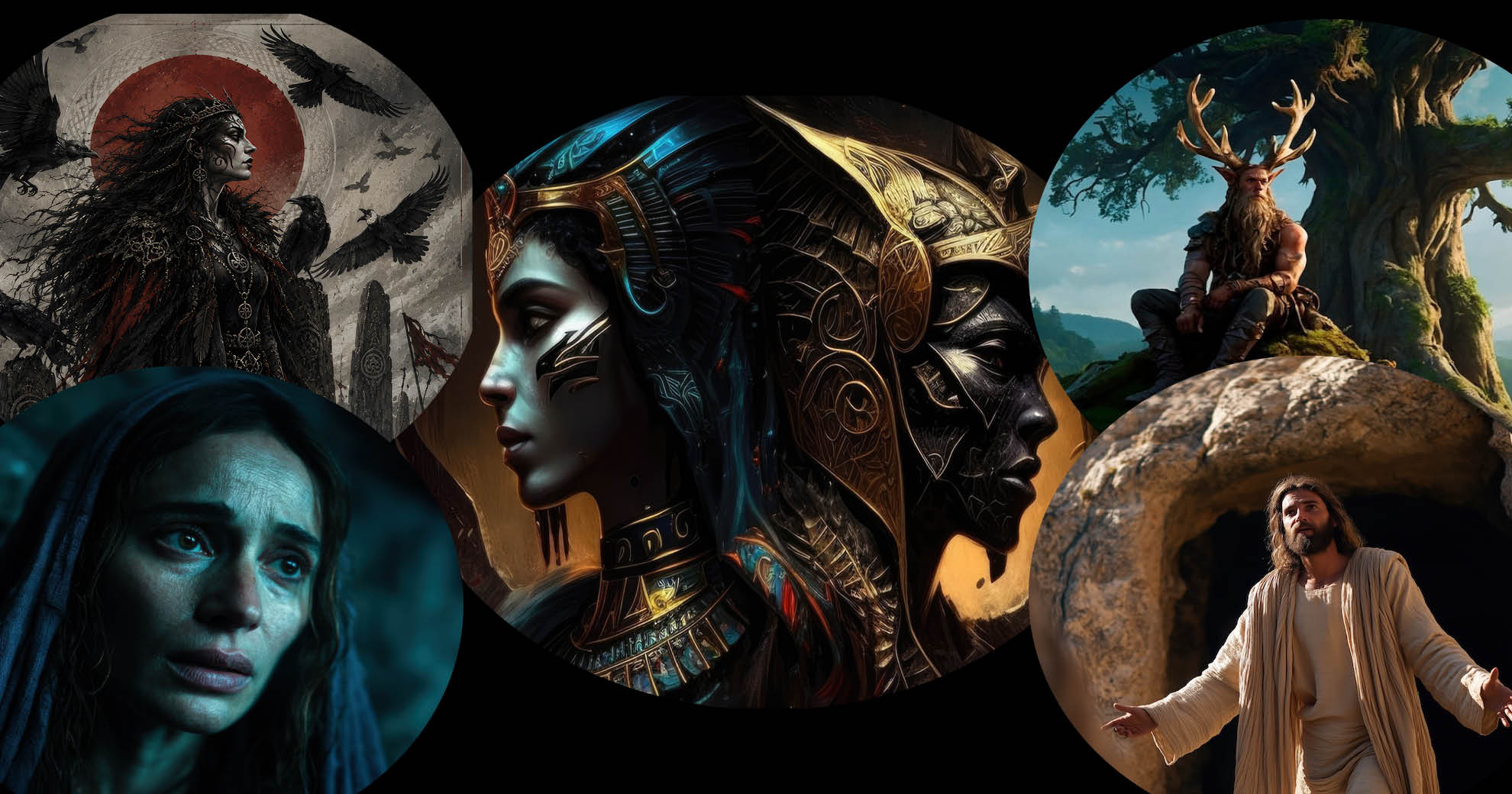
Isis, Egyptian Goddess of Magick and Restoration.
In ancient Egypt, Isis provides one of the most powerful feminine figures for the mysteries of The Element of Water. She was a goddess of magick, motherhood, protection, healing and restoration. She became deeply connected with the story of Osiris and the mysteries surrounding death, loss and renewal.
The story of Isis searching for the scattered pieces of Osiris and restoring what had been lost carries a profound symbolism for this season. Her journey through grief did not end with loss. Through her dedication, magick and love, she became an instrument of restoration. Isis reminds us that what has passed from the physical world is not necessarily erased from our lives. What remains may be carried through memory, wisdom, tradition and love.
For the practitioner, Isis represents the ability to move through the mysteries of loss while remaining open to transformation. During the Element of Water, we may look toward her energy when honoring those who have passed, working with ancestral remembrance or seeking to restore something within ourselves that has been scattered or forgotten. She teaches us that remembrance itself can become a form of magick.
Osiris, Egyptian God of Death and Regeneration.
Osiris is one of the most powerful masculine figures for the Element of Water in ancient Egyptian religion, he was associated with death, the afterlife, vegetation, agriculture, fertility, and regeneration. His mythology became one of the great expressions of the eternal cycle in which death is followed by renewal.
Osiris represents an important truth of the season. What appears to be an ending is actually a transition. The natural world demonstrates this mystery every autumn as leaves fall, plants retreat into dormancy and the visible world becomes quieter. Yet beneath the surface, life continues.
His story provides a powerful way to approach All Hallows’ Eve without viewing death solely through fear or sorrow. Osiris reminds us that the physical form may change while the greater cycle continues. For the practitioner, his energy can represent the wisdom of releasing what has completed its purpose and trusting that transformation is part of the greater movement of life.
Morrigan, The Celtic Goddess of Transformation and Sovereignty
Within Celtic mythology, the Morrigan is a powerful feminine figure associated with sovereignty, prophecy, battle, transformation and the mysteries of life and death. Her association with the raven or crow has also connected her in later traditions with omens, prophecy and the ability to perceive what exists beyond ordinary awareness.
The Morrigan is particularly fitting for The Element of Water because this festival asks us to stand at the threshold between what has been and what is becoming. Her energy is not one of passive change. She represents the power to recognize what is ending and to consciously step into transformation.
Cernunnos, Celtic God of the Wild and The Natural Cycle.
Cernunnos, the horn figure found in Celtic iconography and embraced within many modern pagan and western mystery traditions, represents the wildness of nature, animals, fertility, abundance and the instinctive forces of life. His imagery connects him strongly with a natural world and the cycles through which life, death and regeneration continually move.
At first glance, Cernunnos may seem an unexpected figure for a festival concerned with death in the unseen. Yet his connection to the natural world makes him an important reminder that death is not separate from life. The falling leaf, the dormant seed and the animal preparing for winter are all participating in the same great cycle.
For the practitioners, Cernunnos represents our connection to the living Earth even while we turn toward the mysteries beyond the physical. His energy invites us to remember that we are not observers of nature; we are part of it. The darkness of the season is not an absence of life, but another stage within its eternal rhythm.
Mary Magdalene, a Biblical Figure of Devotion and Transformation.
Within the biblical tradition, Mary Magdalene offers a powerful feminine figure for the mysteries of transformation, grief, devotion, and spiritual awakening. She is especially significant because the gospel accounts place her at the crucifixion and burial of Jesus. It identifies her as one of the first witnesses to the empty tomb and the Risen Christ.
Mary Magdalene therefore stands at a profound threshold between death and the discovery of something beyond death. She approaches the tomb expecting to encounter the physical remains of someone she loved, only to encounter a mystery she could not have anticipated.
Her story carries a powerful message for The Element of Water. We may enter a threshold believing we know what we will find, only to discover that the experience transforms our understanding entirely. Mary Magdalene represents the willingness to remain present in the face of grief and uncertainty long enough to recognize what is being revealed.
For those who work with the symbolism of this festival, she can represent devotion, intuition recognition and the transformation that occurs when we are willing to look beyond what appears to be the final answer.
Lazarus, a Biblical Figure of Death in Return.
Lazarus provide a striking masculine figure for The Element of Water because his biblical story directly confronts the mystery of death and return. In the gospel of John, Lazarus dies and his placed in a tomb before Jesus calls him forth and he returns to physical life.
Whether approach true faith, symbolism or esoteric interpretation, the story of Lazarus carries a powerful message about transformation and the mysteries surrounding the boundary between life and death. The tomb becomes a threshold and Lazarus becomes the figure who passes through that threshold and returns.
For the practitioner, Lazarus can symbolize the parts of ourselves that have entered a period of darkness or dormancy and are waiting to emerge again. His story reminds us that what appears to be finished may not be the final chapter. There are times when something must enter the darkness before it can return in another form.
The Western Mysteries and Esoteric Training.
For the practitioner of Western Mysteries, these figures provide different expressions of the same great mystery. Isis represents restoration and the magick of remembrance. Osiris represents death, regeneration and the continuation of the cycle. The Morrigan brings transformation and sovereignty. Cernunnos reminds us of our connection to the natural world and it’s eternal cycles. Mary Magdalene represents devotion and the recognition of what lies beyond apparent endings. Lazarus represents the passage through death in return.
Within many Western Mystery Circles, the opening of the veil is understood to begin on October 23rd. From this point, the veil is believed to gradually become thinner and more receptive, growing stronger as the month progresses toward The Element of Water, October 30th through November 1st. During these days, the veil is considered to be at its strongest in almost completely open. November 1st is regarded as the strongest point of this opening, while The Element of Water itself is the eve or night before this most powerful day. It is believed that during this time we may sense, dream of or even perceive ancestors as they move within the physical world. The veil then gradually begins to close over the following three days. You may therefore begin sensing or feeling ancestral presence as early as October 23rd and experience its increasing intensity throughout the month and continue to feel or sense those connections even after November 1st as the veil begins to close.
The deeper lesson of The Element of Water is not simply to look toward the world beyond the veil, but to understand what that mystery awakens within us. Water teaches us to listen beneath the surface, to trust our intuition, to remember, to release and to transform. The figures associated with this festival each reveal a different doorway into the same mystery. Death is not necessarily and ending. Darkness is not necessarily emptiness. What cannot be seen is not necessarily absent.
All Hollows’ Eve invites us to become quiet enough to notice what is usually overlooked. A dream may carry a memory. A familiar sent me awaken an unexpected emotion. A name may suddenly come to mind. A feeling may arise that cannot easily be explained. Whether we understand these moments as spiritual connection, ancestral memory, intuition or simply the mysterious workings of the human spirit, this season encourages us to pause and listen.
For the practitioner of western mysteries, this is the deeper gift of The Element of Water, learning to stand at the threshold without fear, to honor what has passed and to remain open to what is being revealed. We are reminded that we too, are part of the great cycle of transformation. We release, we remember, we enter darkness and eventually we emerge again.
May you have the courage to walk between worlds, the wisdom to hear what lies beneath the surface and the strength to embrace the transformation that awaits beyond the veil.
Tori Valspirt
©10/7/26
Gods and Goddesses of The Festival of The Element of Water
Gods and Goddesses of The Festival of The Element of Water
Gods and Goddesses of The Festival of The Element of Water



Leave a Reply
Your email is safe with us.